Hiển thị các bài đăng có nhãn diet. Hiển thị tất cả bài đăng

Thứ Hai, 27 tháng 10, 2008

Want To Lose Weight, Use Pedometer!

When a person is overweight, chances that he or she would become victim of heart disease is much higher. In order to prevent heart disease, overweight or obese people are anxiously finding means to help them cut down the extra weight they have.

United States researchers from the University of Michigan reported in their study on January 15, 2008 in the “Annals of Family Medicine” that walking can actually help people lose weight, especially if they use a pedometer to ensure they are going far enough.

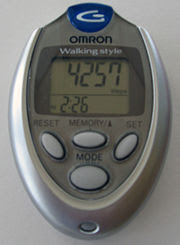
A pedometer (also known as Tomish-meter or step counter) is a device, which counts each step a person takes by detecting the motion of their hips. Originally, it was used by people engaged in sports and physical fitness but now it becomes popular as an everyday exercise measurer and motivator.

The modern pedometer is usually portable and electronic or electromechanical; a typical one is shown below:


It was observed in the study that people who walked 20 to 40 minutes a day lost a small but steady amount of weight. According to the researchers, the increase in physical activity can have health benefits independent of weight loss. In fact, increasing physical activity is expected to lower the risk of cardiovascular problems and blood pressure, and will help dieters keep lean muscle tissue when they are dieting.

A total of 9 studies involving 307 men and women were reviewed in the study. The participants took part in the studies of pedometer use, which ranged from 4 weeks to a year.

Participants in all the studies except one lost some weight (about 0.05 kilo a week on average). The weight loss was found to be 'remarkably consistent' across all of the studies, and this added up to 2.25 kilos over a year.

It is believed that changing eating habits could help even more. People could add between 2,000 steps per day to more than 4,000 steps per day. For an average person, 2,000 steps equals to about 0.6 km.

Thứ Ba, 21 tháng 10, 2008

How Would Hostility Raise Heart Disease Risk?

Before we get into the topic, we need to understand 3 terms: free radical, antioxidant and oxidative stress. Let us look at how they are related.

Technically, oxidative stress is a condition, which occurs when production of free radicals in the human body exceeds the body's ability to neutralize and eliminate them. Free radicals would start chain reactions that disturb the body’s ability to neutralize them, hence resulting in tissue or cell damage. Oxidative stress has been associated with heart disease, cancer and other illnesses.

Antioxidants could stop these chain reactions by removing free radical intermediates and inhibit other oxidation reactions by being oxidized themselves. Antioxidant vitamins like vitamin C and E can help counteract oxidative stress. On the other hand, activities like smoking and pollution can actually increase it.

A study has indicated that hostility could raise a person’s risk of heart disease by depleting the level of certain heart-healthy antioxidants.

The researchers from the University of Minneapolis, who carried out the study, suggested that antioxidants could help explain why hostile individuals are more likely to smoke and drink, and poor diet and smoking can deplete antioxidants.

In their study, the researchers investigated 3,579 men and women of the age between 18 and 30 years old who were participating in the so-called Cardiovascular Risk Development in Young Adults study. Their levels of several different carotenoids and tocopherols (vitamin E) were measured.

It was found that people having high levels of hostility at the beginning of the study were more likely to have lower levels of several types of carotenoids 7 years later, but hostility did not predict levels of tocopherols or lycopene. The increased risk was found to be, nevertheless, small but significant.

Lifestyle factors such as diet, smoking and drinking probably play a part in explaining why hostility reduces levels of antioxidants, but the researchers are not clear whether the differences are importantly related to the risk of coronary heart disease. Therefore, further study is necessary.

Thứ Hai, 25 tháng 8, 2008

Is Reducing Diabetes Risk That Hard for Men?

As we know, people with diabetes are exposed to a higher risk of developing heart disease and other medical complications, regardless of whether their diabetes is of Type-1 or Type-2.

For Type-2 diabetics, whether they are male or female, losing weight through diet and exercise are one of the alternatives that might just lower their risk of getting it. Nevertheless, men may have to work harder in order to have the same benefit.

Researchers at the University of Colorado Health Sciences Center in Aurora studied more than 1,100 adults at risk of Type-2 diabetes and found that those who aggressively perform calorie-cutting and exercise did lower their risk of getting diabetes over the next year. However, although men lost more weight and exercised more than women did, their diabetes risk was not greatly reduced by doing so. These findings were published in July 2008 in the Journal “Diabetes Care”.

In the study, participants were randomly assigned to either an intensive program of lifestyle changes or standard lifestyle advice. People in the former group had to lose 7 percent of their body weight by cutting calories and fat from their diet and exercising for at least 2.5 hours per week. Both men and women were 58 percent less likely to develop diabetes over the next year when they were put in the intensive group.

According to the researchers’ observation, men generally exercised more and were more successful at losing weight: 47 percent reached the 7-percent target compared with 37 percent in women. It is known that weight loss can actually be translated into a reduction in triglycerides (a kind of blood fat) and hence blood sugar could be better controlled. For male participants, the decrease in these 2 factors was greater than the female participants.

Interestingly, there was in fact no additional benefit for men when it was related to diabetes risk. The rates of return to normal glucose tolerance levels and the development of diabetes did not differ very much for both sexes.

One possible reason for such phenomenon is perhaps men had more diabetes risk factors to begin with. Therefore, the researchers suggested carrying out further studies to discover whether and how various diabetes prevention tactics would affect men and women differently.

Thứ Tư, 12 tháng 3, 2008

Is Surgery A Better Choice For Treating Obese Diabetics?

Doctors will usually advise their obese patients to watch their diet in order to cut down the unwanted weight. Surgery will only be used as the last resort when everything else fails.

However, a new study has found that abdominal surgery is more effective than dieting in helping obese diabetic patients to cut weight and control blood sugar.

The research, which appeared in the January 23 Issue of the Journal of the American Medical Association, indicated that Type-2 diabetics, overweight patients receiving gastric bypass surgery lost 5 times more weight and were better able to contain the disease compared to patients who tried to lose weight by dieting.

The study was conducted in Australia by researchers from Monash University in Melbourne. They believed it is not the method but the degree of weight loss that appears to be the major driver of glycemic improvement and diabetes remission in obese participants. As such, they recommended using intensive weight-loss therapy as the first step in the management of diabetes rather than simple lifestyle change.

Over the span of 2 years, the study followed 60 obese participants, some of whom practiced conventional dieting and others who received gastric surgery.

The remission rate in the diet group was only 15 percent as compared to 76 percent for the group receiving the abdominal operation. The surgery group also had an average of 20.7 percent body weight loss after 2 years, comparing with only 1.7 percent among the conventional dieting group. In general, a weight loss of about 10 percent is required for the participants to see a remission in their diabetes.

Data showed that some 20 million Americans suffer from Type-2 diabetes, which is often linked to obesity and high blood pressure. Diabetes results when a person’s body cannot regulate blood’s level of insulin, an essential hormone that tells the body to store or burn sugar.

Very often, diabetics will also have other health problems such as high blood pressure and high cholesterol that increase the risk for heart disease and stroke, and circulatory problems, which can damage heart, liver and kidneys. A patient's vision, legs, feet and other extremities can also be adversely affected.

Data from the American Diabetes Association indicates that more than 65 percent of people with diabetes die from heart disease or stroke.

Thứ Bảy, 5 tháng 1, 2008

Think Before Going For Weight Loss Surgery!

A new research, published in the Archives of Surgery, had shown that people who have undergone so-called bariatric surgery for obesity have a higher death rate than other people of the same age. The cause of death is due to suicide and coronary heart disease, in particular.

Researchers from the University of Pittsburgh studied the data for all Pennsylvania residents who underwent a bariatric operation such as stomach stapling or gastric bypass between 1995 and 2004. They then compared the number of death of these patients with that of those in the general population.

It was found that there were a total of 440 deaths after 16,683 weight loss procedures during the study period. Male gender and advancing age were both associated with the increased death rates.

For all age groups, the death rate was much higher in bariatric surgery patients than in the general population. But for patients between the age of 25 and 34, the difference was particularly pronounced. Their death rates for male and female patients were 13.8 and 5.0 per 1,000 persons per year, respectively. In comparison, the death rates in the general population were 1.3 and 0.6 per 1,000 persons per year.

Coronary heart disease was found to be the most common cause of death. 16 suicides were also found with 10 of them were women. Comparing with the data from the general population, researchers estimated that only 3 suicides deaths would have been expected in this number of people.

The researchers also suggested that a better control of high blood pressure, diabetes, high cholesterol, and smoking, as well as efforts to prevent weight regain by diet and exercise, and psychological support to treat depression and prevent suicide could reduce the excess deaths after bariatric surgery.

Thứ Tư, 29 tháng 11, 2006

What About Slimming?

It is known that obesity can lead to heart diseaes. As a preventive measure, we should maintain a healthy weight. People are, therefore, crazy about slimming but at the same time, they are confused too.

What is the role of special diets in slimming?

As we know, special diets are expensive yet do not help change the eating behavior that leads to overweight or obesity. They may help lose weight relatively fast over a short period of time. It is, nonetheless, advisable to do it under medical supervision.

But, any diet that forbids certain foods, for example Atkins diet, or is extremely low in calories (so called Very Low Carlorie Diets like Cambridge diet), or focuses on special foods such as bread diet, grapefruit diet should be avoided. These methods of losing weight do not always result in any change in the eating behavior. If they are used over a longer time, they are unhealthy and/or do not result in any change in baharior.

In the long term, they are doomed to fail.

Chủ Nhật, 15 tháng 10, 2006

2 Simple Principles To Prevent Heart Disease

Using easily-remembered numbers 3-5-7, the following two simple principles can help you prevent heart disease:

3-5-7 Healthy Heart Diet Principles
3 Highs (high in fiber, freshness, plant-based protein);
5 Lows (low in fat, cholesterol, salt, sugar and alcohol); and
70% Full for your diet.

3-5-7 Healthy Heart Exercise Principles
3 kilometers walk (or 5000 steps) per day;
5 times a week; and
Exercise heart rate at less than (170 minus Age) beats per minute. For example, if your age is 40, then your exercise heart rate should not exceed 130 beats per minute.

Stress and smoking can cause heart disease too, so do manage your stress level and stay away from smoking.