Hiển thị các bài đăng có nhãn pedometer. Hiển thị tất cả bài đăng

Thứ Hai, 27 tháng 10, 2008

Want To Lose Weight, Use Pedometer!

When a person is overweight, chances that he or she would become victim of heart disease is much higher. In order to prevent heart disease, overweight or obese people are anxiously finding means to help them cut down the extra weight they have.

United States researchers from the University of Michigan reported in their study on January 15, 2008 in the “Annals of Family Medicine” that walking can actually help people lose weight, especially if they use a pedometer to ensure they are going far enough.

A pedometer (also known as Tomish-meter or step counter) is a device, which counts each step a person takes by detecting the motion of their hips. Originally, it was used by people engaged in sports and physical fitness but now it becomes popular as an everyday exercise measurer and motivator.

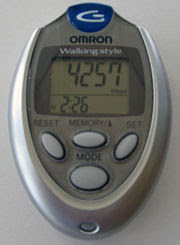
The modern pedometer is usually portable and electronic or electromechanical; a typical one is shown below:


It was observed in the study that people who walked 20 to 40 minutes a day lost a small but steady amount of weight. According to the researchers, the increase in physical activity can have health benefits independent of weight loss. In fact, increasing physical activity is expected to lower the risk of cardiovascular problems and blood pressure, and will help dieters keep lean muscle tissue when they are dieting.

A total of 9 studies involving 307 men and women were reviewed in the study. The participants took part in the studies of pedometer use, which ranged from 4 weeks to a year.

Participants in all the studies except one lost some weight (about 0.05 kilo a week on average). The weight loss was found to be 'remarkably consistent' across all of the studies, and this added up to 2.25 kilos over a year.

It is believed that changing eating habits could help even more. People could add between 2,000 steps per day to more than 4,000 steps per day. For an average person, 2,000 steps equals to about 0.6 km.

Thứ Hai, 11 tháng 2, 2008

Pedometer Might Just Help Lower Your Blood Pressure!

When we grow older, many medical disorders may just approach you whether we want them or not. High blood pressure is just one of them. Once it is developed, we might require medication to reduce the blood pressure. If we do not manage hypertension appropriately, it might just develop into other diseases like stroke and heart disease.

A paper, published by Stanford University in California on November 20, 2007 in the Journal of the American Medical Association, reported that people who use a pedometer to measure how far they walk lose more weight, exercise more and have lower blood pressure than those who do not.

The study was the first to review most previously published research on pedometer use. It is not clear that whether those who use the devices are more motivated or just benefit from the use of the device, or both. Many pedometer-related programs recommend users to set daily goals for themselves. A commonly goal suggested is 10,000 steps or about 8 km.

Researchers actually reviewed 26 earlier studies covering 2,767 people, with an average age of 49. What they found was that users who used pedometer took more than 2,000 extra steps a day, comparing with those who did not use the devices. They also found that having a goal of reaching a certain number of steps was a significant factor.

People who wore the devices on the hip also lost weight as measured by BMI (body mass index) and their systolic blood pressure was significantly reduced. Systolic blood pressure is the top number in the blood pressure readings that indicates maximum pressure of a contracting heart.

As indicated in the report, the use of these small inexpensive pedometers could significantly increase people’s physical activity and help improve some key health outcomes over the short term. However, whether these results are durable over the long term remains unknown. This may suggest it is necessary to carry out long-term study in order to have a better picture on how this may benefit.