Hiển thị các bài đăng có nhãn weight loss. Hiển thị tất cả bài đăng

Thứ Ba, 15 tháng 3, 2011

Why Mango Should Be In Your Diet List?

Who wants to be overweight? If this question is asked, it is quite sure that no one would raise the hand and say yes. The reason is simple. Overweight and obesity would bring along many undesired medical disorders including heart disease, high blood pressure (hypertension), stroke and Type-2 diabetes.

Overweight people, with a few exceptions, would try every means to lose the extra weight they have. They will either adopt weight management program that incorporates exercise and diet or take some products that could help lose weight.

Among the many weight-loss products available, researchers from Cameroon's University of Yaounde found a product, originated from West Africa, which could help overweight or obese people lose weight and stabilize cholesterol levels. It is a fruit called irvingia gabonensis, also known as African mango. Their findings were published on March 25, 2009 in ‘Lipids in Health and Disease’.

In the study, a test group of 102 overweight adults was given either extracts of the fruit or a placebo 2 times a day over a period of 10 weeks. The individuals’ diet and levels of activity were not changed.

At the end of 10 weeks, people who consumed fruit extract had a significant weight loss, a total of 12.5 kilos (or 28 pounds), while those who were in the placebo group showed no change in their weight. Participants taking the extract also had reduction in LDL (bad) cholesterol and nominal improvements in their blood sugar levels.

According to the researchers, the fruit extract helps bodies become more sensitive to lepitin, which is a hormone excreted by the body to control fat storage, especially in the midsection. As many overweight or obese people are resistant to lepitin, the fruit extract helps their bodies to overcome such resistance thus resulting in weight loss.

While some side effects like excess gas, sleep problems and headaches were reported among some participants in the fruit extract group, such side effects were also reported similarly in rate among participants in the placebo group.

Though scientists have suspected that Africa mango has the ability to help trim excess weight, this was the very first clinical study showing its true effects. It is hoped that the new findings would inspire some larger clinical studies to be implemented to further confirm the benefits derived.

Thứ Sáu, 25 tháng 2, 2011

Which Weight Loss Method Is Most Effective In the Long Run?

More and more people are aware of the negative consequences that overweight and obesity will bring to them. Therefore, people who are overweight and obese will use whatever weight loss methods and tactics to help them getting rid of the extra weight they have. Unfortunately, not many of them would succeed in keeping their weight off in the long run.

Some health experts believe that losing lot of weight quickly at the outset would make the dieters gain most of the weight back. Hence, overweight and obese patients have often been encouraged losing weight in small increments. But others found this more of a myth. In fact, scientists have found that no matter how much weight people initially lose, they seem to gain back a similar percentage of that weight over the next year.

According to a new study published online in ‘Obesity Reviews’ in March 2010, people should lose a high amount of weight initially if they were concerned about the long-term weight. The findings were also presented on July 12, 2010 at the International Congress on Obesity in Stockholm, Sweden.

Researchers from the National Institute for Public Health and the Environment in the Netherlands analyzed data from 12 different weight-loss studies covering almost 1,000 overweight and obese participants, who went through an intensive weight-loss program comprising of exercise and nutrition guidance. Duration of all the weight-loss programs differed; each lasted between 10 weeks and one and a half years.

Each participant was weighed at the start and end of the weight-loss program, and again at least one year after completing the program. On average, participant who began at 209 pounds lost about 20 pounds over the duration of the program. One year later, participants were found to gain back an average of about half of the weight initially lost. This indicated that the participants who had initially lost the most weight also ended up with the best long-term results.

Nevertheless, the researchers cautioned people not to drop their weights at unsafe levels. 1 or 2 pounds a week should still be desirable for people wishing to lose weight. Meanwhile, they also suggested that future studies should follow participants for longer than one year after their initial weight loss to better understand the long-term effect of that initial weight loss.

Thứ Sáu, 10 tháng 12, 2010

Why Long-Term Weight Loss Is Not Desirable?

The obesity epidemic has been a pressing issue for the world as overweight or obesity would bring about many medical disorders including diabetes, heart disease, high blood pressure and stroke. The consequence is huge amount of health expenses would be required to cover these diseases.

Naturally, no one would like being overweight or obese and if someone makes a statement like “weight loss is always beneficial, and weight gain is always harmful”, I am quite certain that not many people would raise their hands to object.

However, a paper published in the International Journal of Obesity on September 7, 2010 by researchers from Kyungpook National University in Daegu in South Korea revealed that long-term weight loss might release into the blood industrial pollutants, which is linked to diseases such as Type-2 diabetes, coronary heart disease, hypertension, periodontal disease and rheumatoid arthritis. These hazardous compounds are normally stored in the fatty tissues, but when fat breaks down during weight loss, they get into the blood stream and can reach vital organs.

After studying concentrations of 7 such compounds in blood of 1,099 participants in the United States, they found that those who lost weight over 10 years had the highest concentrations of the compounds, known as persistent organic pollutants (POPs), compared to those who gained or maintained a steady weight.

The findings totally opposed to the overwhelming data showing attaining a healthy weight is good for preventing many diseases. When a study that goes against the common sense, it would naturally arouse doubts or even opposition from other health professionals.

Some of them feared that overweight or obese people might use such findings as an excuse to stop trying to reduce their weights through healthy diet and exercises, while others suggested people should figure out if the study seems sound and applies to the average population.

In fact, even the researchers themselves acknowledged that further studies are required to establish the link between long-term weight loss and health problems.

Thứ Ba, 14 tháng 7, 2009

Can Calories Reduction Lead to Weight Loss?

Data from the Centers for Disease Control and Prevention (CDC) shows that 66 percent of adults in Untied States are overweight and of those, 32 percent are obese.

People are aware of the fact that overweight or obese could increase the chance of developing medical disorders like diabetes, hypertension (high blood pressure), and even heart disease. Scientists also link obesity to certain types of cancer. Recently, several death cases of H1N1 also involved victims who were overweight. As such, overweight or obese people should try their utmost to lose weight.

A study, funded by the National Heart, Lung, and Blood Institute (NHLBI) of the National Institutes of Health (NIH), found that eating heart-healthy, low-calorie foods and exercising is the key to losing weight regardless of levels of carbohydrates, fat or protein. The findings were published on February 27, 2009 in the New England Journal of Medicine.

811 volunteers participated in the NIH study. 38 percent of them were men and 62 percent were women, who aged between 30 and 70, and either overweight or obese. The study examined the diets that have been popular in the United States in recent years.

The so-called "Preventing Overweight Using Novel Dietary Strategies (POUNDS LOST) study found similar weight loss after 6 months and 2 years among participants assigned to 4 diets that were different in the proportions of carbohydrates, fat or protein.

Diets used were low or high in total fat (20 or 40 percent of calories) with average or high protein (15 or 25 percent of calories). Carbohydrate content ranged from 35 to 65 percent of calories. All these diets employed the same calorie reduction goals and were heart-healthy with low in saturated fat and cholesterol while high in dietary fiber.

Participants lost an average 13 pounds (5.9 kilos) at 6 months and maintained a pound (4-kilo) loss at 2 years.

This new research advocated that as long as people follow a heart-healthy, reduced calorie diet, there is more than one nutritional approach to achieving and maintaining a healthy weight. In fact, people who are required to lose weight are provided with flexibility to choose one that they feel most comfortable and most likely to sustain. In other words, the one approach that is most suited to their personal preferences and health needs..

Thứ Hai, 12 tháng 1, 2009

Can Nutrigenetic Diets Help Overweight Individuals Lose Weight?

When an individual becomes overweight or obese, he or she becomes a likely candidate for many medical disorders including heart disease, diabetes, high blood pressure (or hypertension). Therefore, he or she will always be advised to trim the weight by appropriate weight management program.

A finding, which appeared at the online journal BioMed Central: Nutrition Journal in November 2007, indicated that overweight individuals might lose weight and keep it off through personalized diets, based on an individual’s genetic makeup. The researchers also found that people on nutrigenetically tailored diets were more likely to stick to the diet, which means they had greater success in the long term.

Cheek cells were used to screen DNA for 24 variations in 19 genes known to affect nutrient metabolism. The researchers then compared the case histories of 50 individuals who were on nutrigenetic diets with those of 43 patients who did not receive a nutrigenetically tailored diet.

The patients participated in the study were attending a weight loss clinic in Athens, Greece. All of them followed a traditional weight management program that involved a Mediterranean diet, together with exercise and regular follow-up clinic visits. Nevertheless, the researchers modify the diet of the nutrigenetic group based on the genetic results of each individual in the group.

During the first few months, there was no difference was noticed in weight loss between the 2 groups. After about one year, however, the traditional diet group showed a slight average weight gain while the group on nutrigenetic diet continued to lose weight. 300 days later, individuals in the group on nutrigenetic diet were about 5-times more likely to have maintained their weight loss than that in the traditional diet group. Improvement in blood sugar levels was also noted in those in the nutrigenetic diet group.

The researchers believe that by adding a genetic, personalized component to a weight loss program may actually improve motivation and compliance. Meanwhile, the personalized diet might well optimize the content of macro- and micro-nutrients for the individual during a period when overall food consumption is reduced and energy expenditure is increased.

Thứ Tư, 26 tháng 11, 2008

Why Obese Children Could End Up with Heart Disease or Stroke?

In the evolution of heart disease and stroke, there is a saying that “one is as old as his or her arteries”. This does mean that his or her state of arteries is more important than his or her actual age.

A recent paper, presented on November 11, 2008 at the American Heart Association's Scientific Sessions 2008 in New Orleans, revealed that neck arteries of obese children and teenagers experienced similar strain as those of middle-aged adults. The researchers from the University of Missouri School of Medicine and Children's Mercy Hospital, Kansas City, Kansas found that the state of the arteries in these children is more typical of a 45-year-old than of someone their own age.

Data from 34 boys and 36 girls who were likely 'at-risk' because of obesity, abnormal cholesterol and/or a family history of early heart disease were analyzed. These teenagers had an average age of 13, and 89 percent of them were white.

Ultrasound was employed to measure the thickness of neck arteries (carotid arteries) that supply blood from the heart to the brain. When increased carotid artery intima-media thickness (CIMT, in short) occurs, there is a strong possibility that fatty buildup of plaque has taken place, which can clog the arteries and lead to a heart attack or stroke.

The analysis on the data obtained in the study indicated that the children’s ‘vascular age’ was approximately 30 years older than their actual age. A person’s vascular age refers to the age at which the level of artery thickening would be normal for his or her actual age.

In the meantime, the researchers also discovered that a higher body mass index (BMI) and higher blood pressure would have the biggest impact on CIMT.

It was suggested in the study that further research is necessary to determine whether the build-up of artery thickness would decrease if obese children undertake weight loss and exercise.

The researchers believe that something could be done to help those obese children, as the buildup in the vessels was found not hardened and calcified. If the vessel walls and blood flow in adults could be improved through medical treatment presently available, it is highly possible that health experts could come up with some solutions to help obese children even more in the prevention of heart disease and stroke.

Thứ Hai, 27 tháng 10, 2008

Want To Lose Weight, Use Pedometer!

When a person is overweight, chances that he or she would become victim of heart disease is much higher. In order to prevent heart disease, overweight or obese people are anxiously finding means to help them cut down the extra weight they have.

United States researchers from the University of Michigan reported in their study on January 15, 2008 in the “Annals of Family Medicine” that walking can actually help people lose weight, especially if they use a pedometer to ensure they are going far enough.

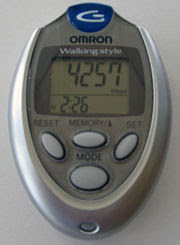
A pedometer (also known as Tomish-meter or step counter) is a device, which counts each step a person takes by detecting the motion of their hips. Originally, it was used by people engaged in sports and physical fitness but now it becomes popular as an everyday exercise measurer and motivator.

The modern pedometer is usually portable and electronic or electromechanical; a typical one is shown below:


It was observed in the study that people who walked 20 to 40 minutes a day lost a small but steady amount of weight. According to the researchers, the increase in physical activity can have health benefits independent of weight loss. In fact, increasing physical activity is expected to lower the risk of cardiovascular problems and blood pressure, and will help dieters keep lean muscle tissue when they are dieting.

A total of 9 studies involving 307 men and women were reviewed in the study. The participants took part in the studies of pedometer use, which ranged from 4 weeks to a year.

Participants in all the studies except one lost some weight (about 0.05 kilo a week on average). The weight loss was found to be 'remarkably consistent' across all of the studies, and this added up to 2.25 kilos over a year.

It is believed that changing eating habits could help even more. People could add between 2,000 steps per day to more than 4,000 steps per day. For an average person, 2,000 steps equals to about 0.6 km.

Thứ Tư, 27 tháng 8, 2008

Would Gastric Bypass Help Achieve Diabetes Remission?

Gastric bypass surgery is a procedure, which involves sectioning off a small portion of the stomach, to create a pouch to limit the amount of food for a person to take. Meanwhile, the surgeon will add a bypass to reroute food past the rest of the stomach and part of the small intestine so that calorie and nutrient absorption could be limited.

Previous studies had shown that such procedure could actually control Type-2 diabetes that is commonly associated with obesity. In the past, it has been thought that the surgery creates hormonal changes that help improvement in diabetes control.

However, the surgeons at Duke University Medical Center in Durham, North Carolina, showed in their latest study that while gastric bypass could cause important metabolic effects that rapidly improve Type-2 diabetes, the key is still the amount of weight patients lose in the first 6 months after surgery. The findings of the study were presented in the month of June 2008 at the annual meeting of American Society for Metabolic and Bariatric Surgery in Washington, DC.

The team studied 71 morbidly obese patients with severe diabetes, which were prescribed with high doses of insulin and oral medications for controlling their blood sugar levels. The purpose of the study was to find out factors that differentiate patients who go into remission from those who do not. “The amount of weight loss by the patient” was identified as the most important factor.

All patients were found to have a better diabetes control as evidenced by better long-term blood sugar levels and lesser medication. Yet, only 48 percent of the patients went into complete remission. According to the researchers, the hormonal effects of gastric bypass surgery are still important but the weight loss in the first 3 weeks to 6 months appears to be a critical factor in diabetes remission.

Morbidly obese patients usually lose about 10 percent of their body weight within 3 weeks of surgery and they can take less medication within the first day or two. This could be an effect on gut hormones, with dramatic improvements in insulin resistance, as explained by the researchers. Nevertheless, greater amount lost at a faster pace seems to improve the chance that patients will remain in remission.

In conclusion, the researchers believed that if the weight-loss effect of surgery could be enhanced by adding medications or rigorous behavior change, it is possible to do better than a 50 percent remission rate.

Thứ Ba, 22 tháng 7, 2008

Liquid Lunch May Be A Healthy Way to Lose Weight!

Finding a way to prevent from weight gain is never an easy task. Being common among people, overeating will eventually cause people to become overweight or even obese. These overweight or obese persons will be at a high risk of developing certain types of cancer, heart disease, diabetes, high blood pressure, stroke, and so on and so forth.

Recently, scientists have suggested that people could bulk up the volume of food with certain gases or water so that they would feel fuller than otherwise. This will help reduce the amount of food they eat afterwards.

In May 2008, scientists from Unilever's research laboratories presented their finding at the European Congress on Obesity in Geneva that the gas-filled meal actually reduced appetite more than the standard one. In the study, they actually tested on 24 people a full milkshake-like meal, and a half-sized version bulked up with gas similar to that used in aerosol whipped cream.

The researchers are surprised to find out that satiety (feeling full) was maintained for 1 - 2 hours or even longer. It is known that there is always a problem with satiety, which is often lost after 15 minutes or so. Therefore, what they found in the study was a pleasant surprise.

In reality, many people who are trying to lose weight do find the maintenance of the weight-loss regime very difficult. Therefore, finding the types of food that could keep a person feeling full will help people eat less.

Nevertheless, not all gases would work. For instance, carbon dioxide, such as those found in carbonated drinks, does not do the job. The study found that only gases that can be stabilized in the food so it does not leave the body before it reaches the stomach.

The scientists admitted that they have yet to find out the answers on why such gas-filled liquid meals work or whether the same effect could be found on solid food. As such, they would still require to do further studies so that more evidence could be gathered.

Thứ Tư, 16 tháng 7, 2008

Don’t Overlook Pre-Diabetes Stage!

When one is diagnosed with Type-2 diabetes, it is often too late to reverse the condition. According to health experts, early detection and intervention in the pre-diabetes stage may help prevent or delay Type-2 diabetes.

So, what exactly is pre-diabetes stage? Pre-diabetes refers to a state when a person’s blood sugar is slightly higher but not high enough to be diagnosed as diabetes. Clinically, it is known as Impaired Glucose Tolerance (IGT) or Impaired Fasting Glucose (IFG).

People with pre-diabetes not only have a higher chance of becoming Type-2 diabetes, but also have a higher risk of developing other medical complications such as heart disease and stroke.

A person having pre-diabetes stage is very likely to progress to diabetes, if nothing is done. However, this may be delayed or even prevented with correct lifestyle modification. In fact, studies have shown that up to a third of people with pre-diabetes may be able to bring their blood glucose levels back to normal over time. Weight loss, regular exercise and medication can correct a key defect in pre-diabetes (namely the hormone insulin, which is ineffective in controlling blood sugar). These three measures help body becomes more sensitive to the action of insulin so that insulin works better in controlling blood sugar, and sometimes, diabetes can be prevented in the pre-diabetes stage.

Unfortunately, pre-diabetes stage does not have significant signs and may just be undetected. The fastest and surest way to find out if one has pre-diabetes is to go for a blood test. IFG can be detected by an early morning blood sample after an overnight fast, while IGT can be detected using an Oral Glucose Tolerance Test (OGTT). This involves taking a glucose drink and a second blood sample 2 hours after the first blood test. For people who are diagnosed with either IFG or IGT, the most important thing for them to do is to relook their lifestyles and modify accordingly. Some medications may also help.

Thứ Ba, 27 tháng 5, 2008

Eat What You Want and Still Lose Weight!

Overweight or obesity can increase a person’s risk of getting diabetes, high blood pressure, stroke and even heart disease. Therefore, if one gets too heavy, the doctor will advise him or her to watch the diet; cutting down the amount of food is usually recommended.

If someone tells you that you can eat what you want and you can still lose weight, do you believe it? Many of us would just laugh and ignore because this contradicts to the many advices that we have heard so far. However, perhaps in the near future, things may change because scientists had found a breakthrough that could pave the way for fat-burning drugs.

A recent research discovered a way to help people lose weight without cutting back on food. The study was conducted by scientists at the Howard Florey Institute, Victoria University, La Trobe University, Deakin University, the Baker Institute and the University of Melbourne. The findings, which were published on April 29, 2008 in the United States-based Proceedings of the National Academy of Sciences, could be used to develop drugs to assist weight loss.

The Australian researchers found that by manipulating fat cells in mice, they were able to speed up the animals' metabolisms. If a particular enzyme, known as “Angiotensin Converting Enzyme” (ACE), in a mouse was removed, it could eat the same amount as other mice yet burn more calories, and thus gain less weight.

Specifically, mice without ACE were 20 percent lighter than the normal mice and had 50 to 60 percent less body fat. It also appeared that the slimmer mice have less chance of developing diabetes since they processed sugar faster than the normal mice.

Drugs that impair the action of ACE already exist but they are mostly used to combat high blood pressure. Therefore, maybe what the scientists can do is to find the right dosage of hypertension (high blood pressure) medication, or develop a new type of drug of the same class and use it as weight-loss pills.

Nevertheless, the scientists had not found why the genetic manipulation could lead to weight loss, and they do not know whether this will work in humans. Thus, more research may be required to find out the unknown before human trial can begin.

Thứ Sáu, 22 tháng 2, 2008

Some People Are Prone To Be Obese From Birth!

Being a risk factor for heart disease, obesity is frequently associated with unhealthy lifestyle and diet, but a new study could have probably changed this perception.

A new animal study, conducted by the University of Southern California, Los Angeles and released on February 5, 2008 in the February issue of Cell Metabolism, revealed that obesity might be hard-wired into the brain from birth, and this will make some people to be more prone to put on weight than others do.

It seems that appetite and obesity are built into the brain. In the study, obese rats had faulty brain wiring that impaired their response to the hunger-suppressing hormone leptin. Leptin plays an imperative role in fat metabolism. Produced by fat tissue, it acts as a signal to the brain about the body's energy status. Although its role in weight regulation is still unclear, it is understood that the brain calibrates the need for food intake based in part on leptin levels.

Previous research had shown that the brains of obesity-prone rats were insensitive to these leptin signals, so the researchers looked for brain abnormalities that could explain this. They found defects in the brain circuits that relay leptin signals throughout the hypothalamus, which is the brain's central switchboard for regulating conditions in the body.

According to the researchers, the neurodevelopmental differences in these animals can be seen as early as the first week. The results show that obesity can be wired into the brain from early life. Exercising and eating right might improve the rats’ condition, but the findings suggest that the propensity to gain weight cannot be reversed.

If we replicate the findings in humans, then people should be careful about those one-size-fits-all approach weight management and weight loss, especially those individuals who are genetically predisposed to obesity because of the way their brains are configured.

Thứ Sáu, 1 tháng 12, 2006

Is Natural Products Harmful In Helping Weight Loss?

Many natural products contain bioactive substances that suppress appetite, stimulate metabolism, or induce water loss from the body.

One should note that though they are 'natural', it does not mean that they are not harmful.

The danger of using these products lies in fact that they are used without any medical supervision. Abuse cases on using natural products to help weight loss have been mentioned in newspapers at regular intervals.

Thứ Năm, 30 tháng 11, 2006

Can Drugs Help To Lose Weight?

There are certain drugs that could induce weight loss.

But, one should be cautious in the use of these drugs. It should be strictly under medical supervision and only for short periods. The main reason is such drugs may possibly have adverse side effects.